How Long and How Far for Kids

“How long” asks about duration or length; “how far” asks about distance. “How Long” and “How Far” for Kids: A Practical Guide helps families separate these ideas, form correct questions, and choose accurate units. A child asks, “How long is the lesson?” about minutes, but “How far is the school?” about kilometres or travel distance. Younger learners can practise short question-and-answer pairs; older learners can add verb tenses and precise units. First decide what is being measured, then choose the question phrase.
What Children Need to Understand
Children must separate three ideas: duration, physical length, and distance. Duration measures time: “How long is the film?” Physical length measures an object from end to end: “How long is the table?” Distance measures the space between places: “How far is the park from home?”
The answer reveals the intended meaning. Duration uses seconds, minutes, hours, days, or years. Physical length may use centimetres, metres, inches, or feet. Distance uses metres, kilometres, yards, or miles. Families can practise units encountered at home and school, then explain that measurement systems vary between countries.
Teach “How Long” and “How Far” for Kids: A Practical Guide through three visual cues: a timeline for duration, a ruler for length, and a map route for distance. Visual cues help multilingual children connect each English phrase directly with its meaning instead of translating individual words.
How to Form Each Question
With be, use question phrase + is or are + subject: “How long is the break?” “How long are the curtains?” and “How far is the library from your house?” Questions comparing two places often require from.
With other verbs, use question phrase + do, does, or did + subject + base verb: “How far do you walk?” “How long does the journey take?” or “How far did the ball roll?” After does and did, keep the lexical verb in its base form: take, not takes or took.
The table captures the core rule in “How Long” and “How Far” for Kids: A Practical Guide: choose by meaning, not by object. A bus trip has both duration and distance. “How long is the bus trip?” asks about time; “How far is the bus trip?” asks about route distance.
How to Give Clear Answers
For duration, answer with for plus a time period: “We played for twenty minutes.” In sentences describing an action continuing from the past, since marks a starting point: “We have lived here since May.” Compare: “We have lived here for six months.” A period and a starting point are not interchangeable.
For physical length and distance, give a number and unit when possible. “The rope is three metres long” conveys more than “The rope is long.” “The beach is five kilometres away” specifies distance. Approximation sounds natural: “It is about ten minutes away on foot” or “It is roughly two miles from here.”
Time questions may follow another pattern: “How long until dinner?” Answer: “In thirty minutes.” Keep “How Long” and “How Far” for Kids: A Practical Guide nearby to reinforce the difference between travel time and physical distance. A shop can be one kilometre away yet require twenty minutes on a busy route.
Common Mistakes and Simple Corrections
A frequent error swaps the phrases. “How long is your school from home?” should be “How far is your school from home?” Conversely, “How far is the lesson?” should be “How long is the lesson?” Before correcting, ask whether the expected answer describes time, length, or distance.
Children may omit an auxiliary or mark past tense twice. “How long you play?” needs do: “How long do you play?” “How long did the trip took?” becomes “How long did the trip take?” Because did carries the past tense, the lexical verb returns to its base form.
A number without a unit creates ambiguity. “It is five” could mean minutes, metres, or miles. While studying “How Long” and “How Far” for Kids: A Practical Guide, encourage complete answers first. Once meaning is established, accept shorter replies: “Five minutes,” “three metres,” or “two kilometres away.”
Practice Through Short Routines
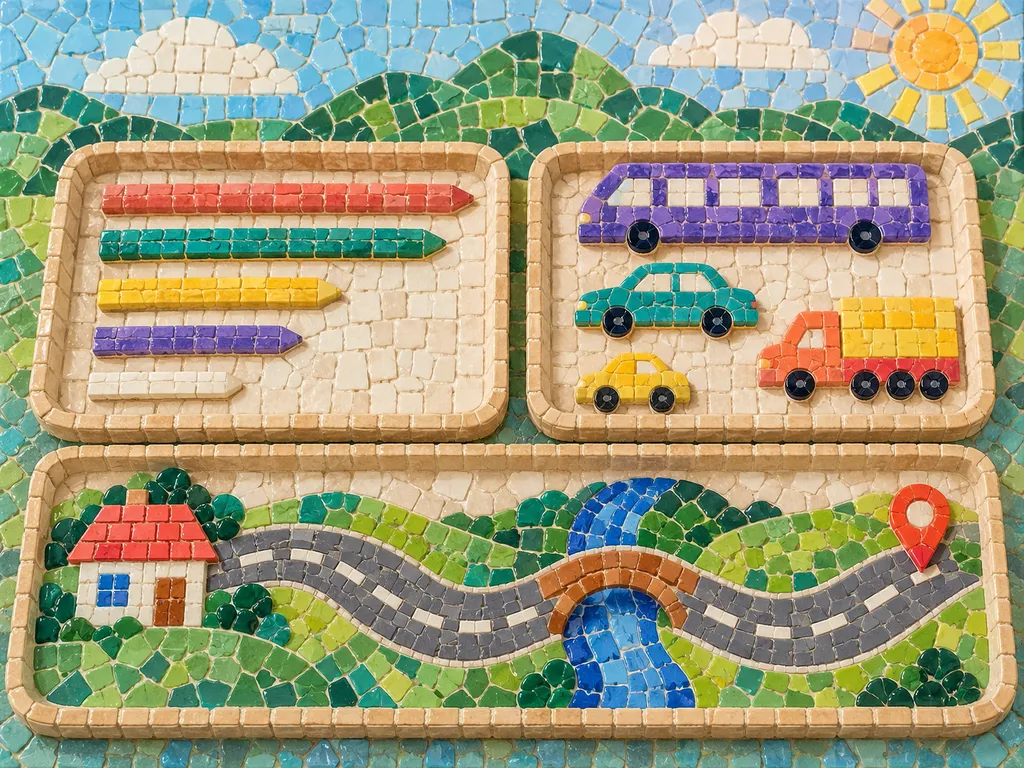
Use “How Long” and “How Far” for Kids: A Practical Guide in brief speaking routines instead of one extended grammar lesson. Measure a book, time a song, and estimate a familiar route. Ask before and after checking: “How long do you think the song is?” then “How long is it?” Prediction gives children a reason to listen.
Choose “How Long” or “How Far”
Complete each question. 1. _____ is the playground from your home? 2. _____ is this pencil? 3. _____ does breakfast take? 4. _____ did the toy car travel? 5. _____ have you studied English? Answers: 1. How far; 2. How long; 3. How long; 4. How far; 5. How long.
Next, ask your child what each answer measures. Question two requires physical length; question three requires duration. Naming the unit exposes the distinction and tests understanding more effectively than repeating the question phrase.
Repair the Questions
Correct each sentence. 1. How far is the cartoon? 2. How long do the station from here? 3. How long did the match lasted? 4. How far is the shelf? Suggested answers: 1. How long is the cartoon? 2. How far is the station from here? 3. How long did the match last? 4. How long is the shelf?
For younger children, use objects, gestures, and one short answer at a time. Older learners can compare tenses: “How long did you wait?” and “How long have you waited?” During one-on-one lessons, our tutors can adapt vocabulary and task length while preserving the contrast between time, length, and distance.
When a word has several meanings or pronunciations, Cambridge Dictionary is a useful check before turning it into child-friendly examples.
Frequently Asked Questions
Can “How Long” Ask About Both Time and Size?
Yes. “How long is the lesson?” asks about time; “How long is the rope?” asks about physical length. The noun and context determine the meaning. Ask your child to name the expected unit first. Minutes or hours indicate duration; centimetres, metres, inches, or feet indicate physical length.
Can “How Far” Be Answered with Travel Time?
Yes, in everyday speech. Someone may answer “How far is the station?” with “It is ten minutes away.” The response describes practical travel time, not exact distance. Explain that “two kilometres” and “ten minutes on foot” both answer the question, but measure different things.
When Should a Child Use “For” and “Since”?
Use for with a period: “for two hours” or “for three years.” Use since with a starting point: “since Monday” or “since 2024.” “How Long” and “How Far” for Kids: A Practical Guide introduces this distinction after basic duration questions because it supports advanced duration forms.
How Can Multilingual Families Practise Without Translating?
Connect each phrase with an action. Point along a ruler for physical length, trace a map route for distance, and tap a clock for duration. Then ask your child to choose a unit and form one English sentence. Visual cues preserve meaning when a family speaks several languages at home.
How Much Practice Does a Child Need?
Brief, repeated practice works better than one crowded worksheet. Try three questions during a familiar routine: measure an object, time an activity, and discuss distance to a place. After an accurate answer, change the tense or unit. Stop before fatigue and resume another day.
Start your child's English journey today — book a trial lesson with LearnLink.
Stay updated on our latest tips and resources by following us on Instagram LearnLink.